Programmes that give cohorts shared language and tools built around your institution's own cases.
Why Training & Workshops?
Leadership in international knowledge institutions is hard for reasons most training never touches. Accountability runs to member states and donors rather than shareholders, and authority is earned through expertise; management arrives late in most careers here. Programmes designed for a generic professional in a generic organisation ask participants to translate everything before they can use it. Most of the translation never happens, and the learning stays in the room.
I design and deliver training for cohorts and professional groups across UN agencies and multilateral organisations, research institutes and universities, INGOs and foundations, and sustainability functions in the private sector. A cohort might be a senior leadership group, a middle-management tier, technical experts moving into management, or an internal coach pool
“Marco did an excellent job in designing and organizing our technical workshop. He really adds value with his institutional knowledge. ”
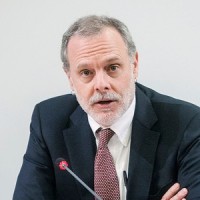
Dr. Benjamin Davis
Director, ESP DivisionFood and Agriculture Organization of the United Nations (FAO)
Built for the room it will meet, and for the Monday after.
Most organisations that commission leadership training have been disappointed by it before: engaging sessions, positive feedback, and six months later the old patterns running again. The failure is rarely about content. Training changes behaviour when it is designed around what is hard to apply, and it fades when it is designed around what is interesting to learn.
01
Start with who is in the room
Design begins with conversations about who will be there and what they are carrying. For longer programmes, a short diagnostic ahead of the first session often changes the design considerably.
02
Practise on your own cases
The material draws on thirty years inside these institutions, and the cases are the institution's own: participants work on situations they actually face rather than classroom examples.
03
Work backwards from transfer
What happens after the session decides whether the training was worth commissioning. Between sessions, participants apply the material to live situations and bring the results back; the aim is a shared language the cohort keeps using after I have gone.
The test of a training programme is what participants do differently six months later.
Relevance
Content that reflects your context closely enough that participants stop translating and start applying. The clearest sign: examples from the room replace the examples on the slides within the first hour.
Shared Language
A common vocabulary for the problems the cohort keeps meeting: feedback, delegation, decisions under pressure. Conversations start further along, because nobody has to rebuild the frame each time.
Traction
Approaches that stay connected to real work after the programme ends. Participants keep using the material because it was practised on their own cases, and colleagues notice before the evaluation forms go out.
Three common starting points
These are starting points, not fixed packages. In the introductory call we clarify the issue, the objectives, and whether assessments, stakeholder interviews, or sponsor involvement would add value. I then prepare a proposal around the work.
Every programme includes: a design conversation about who will be in the room · cases drawn from the participants' own work · practice during the session, not only content · a follow-up on what took hold and operational recommendations. What participants bring into the room stays there. Reporting to sponsors covers themes and outcomes, never individuals.
The workshop
For one group and one recurring topic or challenge. A focused session, built to be used the following week.
- half or full day on a recurring issue
- design conversation with the commissioner
- built on the institution's own cases
- casework and peer consultation rather than lecture
- themes and follow-ups summarised afterwards.
The programme
Building capability for a cohort, spread over weeks or months, so material meets real situations between sessions.
- Around six months
- relevant diagnostic and individual interviews at the start
- An opening retreat, then sessions built into the team's real meetings
- Individual conversations where needed, including with the team leader
- Closing review against agreed objectives
The curriculum
Leadership development that runs across cohorts, years, and duty stations, and evolves between rounds.
- A standing arrangement, typically one to three years, reviewed annually
- delivered across cohorts and refined between rounds
- co-designed with the L&D team
- support for internal facilitators/coaches
- typically contracted through an LTA or framework agreement
Want to discuss your training needs?
Rather explore first in writing?
Frequently asked questions
It starts with the audience and context, before any content decisions. That means talking with the commissioner, and often with participants, about what the cohort is dealing with and what should be different afterwards, beyond positive feedback. Format and content follow from those conversations rather than from a pre-existing module.
The core focus is leadership, team performance, and organisational complexity in international and mission-driven contexts. Common topics include leading without formal authority, working with institutional politics, managing across cultures and mandates, team dynamics, and leading through change. Content is adapted to the audience rather than delivered as a standard curriculum.
Yes. In person tends to produce deeper engagement and suits work that needs real reflection or group process. Online works well for focused content and for dispersed cohorts, and I run those sessions from a dedicated studio with professional audio and video. For hybrid sessions on site, I bring the equipment to keep remote participants in the conversation rather than watching it. Many programmes combine formats.
Context specificity, mainly. Most leadership training draws its concepts and examples from a corporate world. These programmes are built for leaders across the UN system, research, civil society, and corporate sustainability, institutions with their own political dynamics and professional cultures. The difference decides whether the content lands or slides off.
By designing for transfer from the start. Content connects to the challenges participants bring, and reflection time sits between sessions where the format allows. I also work with the commissioning organisation on what will support or obstruct application back in the workplace. What happens after the session matters as much as what happens in it.
In the proposal, after a design conversation. Cohort size, number of sessions, diagnostics, and materials shape the effort, so I quote once those are clear. Organisations typically contract through framework agreements, LTAs, or individual contracts.