
Coaching for senior professionals and leaders when expertise is no longer enough.
Why Individual Coaching?
Most of my clients built their credibility through technical excellence, as researchers, policy specialists, programme managers, or subject-matter experts. They work across UN agencies and multilateral organisations, research institutes and universities, INGOs and foundations, and sustainability functions in the private sector.
Then the work changed. The problems got messier and the stakeholders more political. Decisions stopped yielding to evidence alone. Their training had prepared them to analyse and advise; it had not prepared them to use authority, or to decide what analysis cannot settle.
My coaching targets what generic leadership development rarely reaches.
Marco, I got more out of a few one-hour coaching sessions with you than from several years of management training.
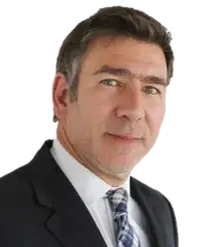
Dr. Fabricio Guariglia
DirectorProsecutions Division
International Criminal Court (ICC)
The issue in front of you, and the way you are reading it.
Many of my clients have tried coaching before. The sessions were good; the patterns did not shift. Usually that comes down to what the coaching was designed to reach. I work on both levels at once.
01
Start with the live issue
A larger mandate, a restructuring, a hard decision, a relationship that stays strained. The work stays anchored in what you actually face.
02
Surface how you are reading it
The assumptions about authority and responsibility that decide which options you can see. They are hard to notice while they are doing their job; a bigger role tends to expose them.
03
Test a different move in practice
Insight goes back into the work between sessions, as a conversation to have or an experiment to run. The aim is to handle the issue at hand, and to be better placed when the next one arrives.
Clients rarely point to new skills. They describe thinking differently, about the work and about themselves.
Perspective
A clearer read of what the role requires, even when the situation is ambiguous. Less time lost to problems that turn out to be symptoms, and a better sense of which battles belong to the role and which belong to older habits.
Judgement
Sounder calls where evidence alone cannot settle the question and waiting costs more than deciding. Decisions that stay decided: fewer quiet reversals, and more comfort owning a call that some in the room disagreed with.
Influence
The standing to be heard and trusted in the rooms where decisions are made. Clients speak more selectively and land more of what they say, with less need to prove their expertise before taking a position.
Three common starting points
These are starting points, not fixed packages. In the introductory call we clarify the issue, the objectives, and whether assessments, stakeholder interviews, or sponsor involvement would add value. I then prepare a proposal around the work.
Every engagement includes: agreed objectives · confidential coaching sessions · applied work between sessions · a closing review against objectives.
All coaching conversations are confidential. In sponsored engagements, reporting covers objectives and progress, never the content of sessions.
The live issue
For a specific challenge with a deadline attached: a difficult conversation ahead, a strained relationship, a decision that keeps being deferred.
- Duration: 1-3 months
- 4-6 sessions of 60–90 minutes
- May include: a brief intake conversation with the supervisor or sponsor
The transition
For the expert-to-leader move: a new mandate, a first senior leadership team, or a role that has quietly outgrown the habits that built it.
- Duration: 4-6 months
- 8-10 sessions of 60-90 minutes
- Typically includes: A 360° assessment or stakeholder interviews, a midpoint reflection, and three-way contracting where the organisation sponsors the work.
The exposed role
For senior experts and leaders in high-visibility roles: a restructuring, political scrutiny, or a mandate larger than the resources behind it.
- Duration: 6-9 months
- 10-12 sessions of 60-90 mins, scheduled around the demands of the role
- Often includes: Leadership Circle 360, confidential stakeholder interviews, and sponsor alignment at agreed points.
Want to discuss which approach suits you best?
Rather explore first in writing?
Frequently asked questions
Most executive coaching is built for a corporate context. The assumptions and the language reflect a world that looks quite different from a UN agency, an INGO, or a research institution. My practice is built for leaders in these environments. I do not need the context explained, and that shapes the work from the first conversation.
That happens often, and it does not change the basis of the work. Sessions remain confidential. What you bring to the coaching, and what emerges from it, is not reported back to your organisation. What can be discussed with a sponsor or line manager, progress, focus areas, broad themes, is agreed with you explicitly at the start. Where the organisation runs a selection process, the first meeting is usually a chemistry conversation, and the same confidentiality applies from that point on. The coaching relationship only works if you can be honest in it. That requires clarity about what stays in the room.
One-to-one, typically sixty to ninety minutes, online or in person. No fixed formula. Some sessions are structured around a specific challenge you bring. Others follow a thread that has been developing across several conversations. The work stays grounded in your actual context rather than frameworks applied from outside.
Against the objectives agreed at the start, with regular reflection points during the engagement and a closing review at the end. Some engagements begin with a 360° assessment or another diagnostic to set a baseline, which makes change easier to see. The rest shows up in the day-to-day: patterns caught before they take over, and colleagues noticing a difference before you mention it.
Coaching works best when the challenge is genuinely about how you are leading. It is less useful when the problem sits mainly in the organisation's structure or politics rather than in how you lead within them. If you are not sure, start with a conversation. I will tell you honestly if something other than coaching is likely to be more useful.
In the proposal, after the introductory call. Duration, assessments, stakeholder interviews, and sponsor involvement drive the scope, so I quote once those are clear. For organisations, assignments can run through framework agreements, LTAs, rosters, or individual contracts.